

Tips for New Trucking Companies
Starting a trucking company is an exciting step, but the first months can be challenging.
Many new carriers quickly realize that the trucking industry is about more than just owning a truck — it requires planning, communication, and understanding the freight market.
One of the first surprises new carriers face is that they cannot always book loads with every broker they encounter. Many larger brokers such as TQL, RXO, C.H. Robinson, and others have onboarding requirements for new carriers. These requirements may include a minimum amount of time with active authority, insurance verification, and compliance checks. Depending on the broker, these requirements may range from three months up to two years of active authority.
For carriers who are just starting out, this can feel frustrating at first. However, it is a normal part of the industry, and understanding how the system works can help new carriers navigate the market more effectively.
Fortunately, there are many smaller brokers who are willing to work with newer carriers and often provide the first loads. Getting those first opportunities is not always easy. New carriers usually need to contact many brokers and introduce their company through load board platforms such as DAT Load Board or Truckstop.
Our Experience Starting as a New Carrier
Before we move on to the real challenges in this industry, we would like to briefly share our experience from the time when we were just beginners.
From our own experience at TRANSGEORGIA, we started our journey in 2022, and our very first load was booked with TeK Transportation. Reaching that opportunity required persistence — calling many brokers and finding one willing to work with a brand-new carrier.
Like many new carriers, the beginning was not easy. We had to prove ourselves load by load, building trust through consistent performance, clear communication, and reliability on every shipment.
Throughout our journey, we have seen both ups and downs, something every carrier eventually experiences in this industry. The years 2022 and 2023 were among the most challenging periods for many carriers, as fuel prices reached extremely high levels while freight rates were not keeping up with operational costs. Because of these market conditions, many carriers were forced to leave the industry and sell their trucks.
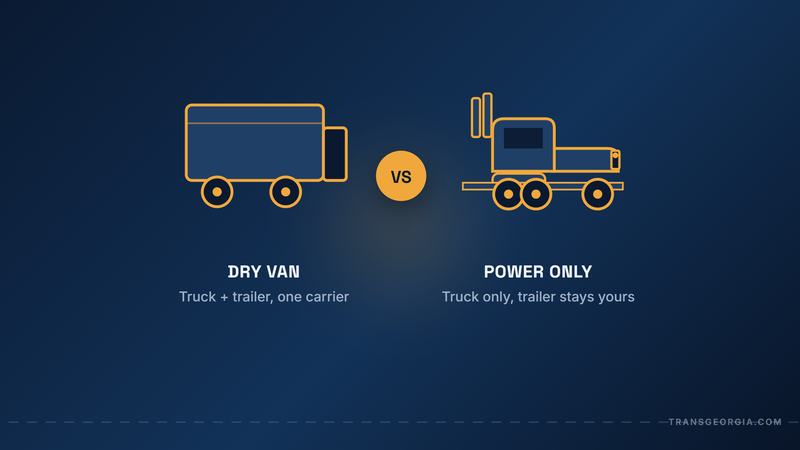
During that period, we also had to adjust the way we operated. We initially started with dry van operations, but during those difficult times we decided to switch to power-only loads. This helped us reduce costs related to trailer maintenance and gave us more operational flexibility.
At that time, it was also necessary to have at least six months of active authority to work on Amazon power-only loads, which offered relatively stable rates compared to the broader market conditions. Another advantage was that Amazon paid weekly, which meant we did not need to use factoring for those loads. This also helped us save a significant amount of money.
Even during that difficult period, we managed to gradually increase our fleet and continue moving forward while remaining active in the industry.
Experiences like this demonstrate an important reality about the trucking business — the market always moves in cycles of ups and downs. Successful carriers understand that difficult periods will come, and being prepared for those moments is part of long-term survival.
Today we have been operating in the market for over four years, and one important lesson stands out: your company’s reputation and performance are far more valuable than a few hundred dollars you might lose while resolving a problem professionally.
In the long run, brokers remember reliable carriers who communicate clearly and handle challenges responsibly. Protecting your company’s name and reputation should always come before short-term financial gains.
As we often say in this business:
“A load might pay today, but a good reputation pays for years.”
In the next chapters, we will discuss some of the common challenges new carriers may face in this industry and how they can be handled based on our experience.

Turning first loads into relationships
Once a carrier secures those first loads, the next important step is maintaining strong relationships with those initial brokers. Delivering loads without issues, communicating clearly, and maintaining high performance increases the chances that those brokers will continue to work with you.
Another useful tip based on our experience is to ask for recommendation letters from the brokers you successfully work with. The more recommendation letters you collect, the more credibility your company builds in the market.
These recommendation letters can sometimes help you get set up with brokers even when you do not yet meet all of their standard onboarding requirements. In some situations, a broker may have an urgent load but cannot immediately onboard a new carrier due to compliance rules.
In such cases, providing strong references from other brokers you have worked with can help the brokerage’s compliance team make an exception. Sometimes carriers may also offer a slightly lower rate to help the broker solve an urgent situation, while at the same time presenting those recommendation letters as proof of reliability.
This approach can occasionally lead to exceptional setups with brokers who might otherwise require more authority history. Opportunities like this can help new carriers access better freight and build relationships faster during their early months in the industry.
A professional carrier understands that their role is not to create problems for brokers but to help solve them. Smooth operations, proactive communication, and responsible handling of unexpected situations at pickup or delivery are what truly build trust.
In many cases, the real value of a carrier becomes visible when problems arise. A carrier who communicates clearly, manages delays professionally, and ensures the freight still arrives safely becomes a trusted partner. That is exactly why brokers often prefer to continue working with carriers they trust — and sometimes are even willing to pay more for the confidence that the load is in safe hands.
Growing Your Carrier Business Step by Step: What You Need to Pay Attention To
New carriers should understand that it is not always easy to access the same quality of freight that larger, more experienced carriers receive. Companies with older MC authorities, strong track records, and larger fleets often have long-standing relationships with brokers and therefore gain access to better and more consistent loads.
Because of this, new carriers should avoid rushing into rapid fleet expansion. Instead, it is better to grow step by step with a clear plan for increasing capacity as your company’s experience and reputation develop.
As your fleet grows, operational organization becomes increasingly important. For example, once a company begins operating five or more trucks, having a dedicated yard can significantly improve efficiency by helping manage parking, equipment organization, and daily operations. It also adds credibility when working with brokers, as it demonstrates a more established and professional operation.
There are also several important operational details that new carriers should pay close attention to when booking and hauling loads. Since new carriers often work with a limited number of brokers at the beginning, the loads offered may not always be ideal in terms of rate, pickup and delivery times, commodity type, or weight.
One of the most important things to verify is the actual weight of the freight. Sometimes the weight listed by the broker may not perfectly match what is loaded at the shipper. For example, a load may be listed as 30,000–44,000 lbs, but the actual weight could be higher once the trailer is loaded. To avoid potential violations or operational issues, it is important to always check the weight on the Bill of Lading (BOL) and scale the truck when necessary to ensure the freight is properly loaded.
It is also important for carriers to be prepared with proper equipment. Drivers should carry sufficient straps and load bars in case the freight needs to be secured properly. In some situations, the shipper may not secure the freight correctly, and it becomes the carrier’s responsibility to ensure the load is safe for transportation.
Taking photos at pickup is another important practice. These photos can serve as proof of how the freight was loaded and secured. In case of any claims or disputes regarding damaged freight, having documentation can protect the carrier from potential financial losses.
If any damage is discovered at delivery, it is important to ask the receiver to note on the Bill of Lading that the seal was intact. This documentation can help protect the carrier from being held responsible for damages that occurred before or during loading.
New carriers should also make sure they have operational funds available for unexpected expenses. For example, sometimes carriers are required to pay lumper fees at pickup or delivery. It is important to verify these details in the Rate Confirmation (RC) or ask the broker about them before accepting the load.
Another item that should be clarified during booking is driver assist. In some cases, the driver may be asked to help with unloading. If driver assist is required, carriers should ensure that the broker agrees to additional compensation for that service.

Factoring is another critical element for new carriers. Choosing the right factoring company and negotiating favorable terms can have a direct impact on your cash flow. It is always advisable to review the factoring percentage carefully and, when possible, start with non-recourse factoring terms.
At TRANSGEORGIA, we have been fortunate to work with strong factoring partners under favorable terms. If you have questions about factoring or would like to learn more about our experience, feel free to reach out.
As your authority becomes older and your performance record grows stronger, more brokers will begin to trust your company with higher-value freight.
After approximately three months, additional brokers may begin onboarding your company. However, challenges can still exist until your authority reaches around six months. At that point, many larger brokers may allow you to set up with them and gain access to their internal load boards.
It is also important not to rely only on public load boards like DAT or Truckstop. Many large brokerage companies operate their own internal load boards where high-quality freight is posted directly and often booked quickly by experienced carriers.
Based on our experience at TRANSGEORGIA, we have also searched for loads on platforms from brokers such as RXO, TQL, C.H. Robinson, J.B. Hunt, and Uber Freight, along with other brokerage platforms.
Our goal has always been to grow step by step, gradually expanding our fleet and building long-term partnerships while securing more dedicated and higher-value freight in the highly competitive U.S. freight market.
For those who are just starting their journey and would like to learn more practical tips and insights, feel free to contact us by email at info@transgeorgia.com, visit our website Transgeorgia.com, or connect with us on Linkedin. We are always happy to share our experience and support others in the industry.